Discover the Forgotten Way in the Riaño Mountains
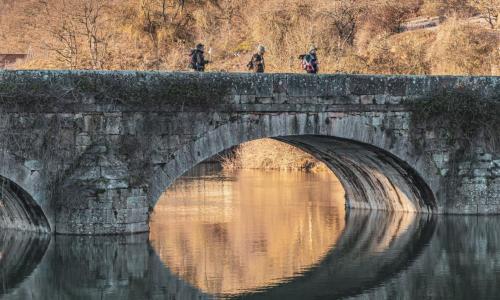
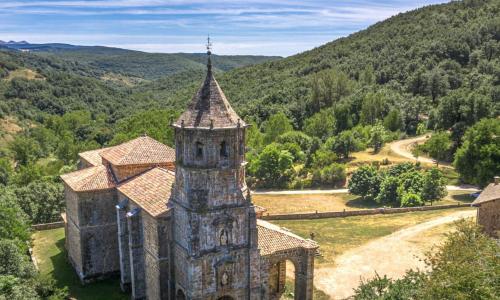
The Camino Olvidado (Forgotten Way) is one of those incredible pilgrimage routes. It crosses the Riaño Mountains, passing through historic villages, breathtaking landscapes, and offering a sense of peace that is hard to find on more crowded trails. If you are looking for a different experience on the Camino de Santiago, far from the crowds and deeply connected to the purest essence of northern Spain, keep reading.
What Is the Camino Olvidado?
The Camino Olvidado, also known as the Old Way of St. James, is a historic route dating back to the 9th century. It was one of the earliest paths used by pilgrims who, fearing attacks in the Meseta region during Muslim rule, preferred the northern valleys.
This alternative route crosses less crowded mountain areas and, in the province of León, passes through natural gems such as the Riaño Mountains, connecting villages rich in culture, traditional architecture, and stunning landscapes.
For centuries it was forgotten—hence its name—but today it is regaining popularity thanks to hikers, pilgrims, and rural tourism lovers seeking a more authentic route.
Stages of the Camino Olvidado
As it crosses the Riaño Mountains, the Camino Olvidado passes through several municipalities within the destination’s 25 towns. The most notable stages in this area include:
Guardo – Puente Almuhey
This stage passes through Morgovejo, La Sota, and Valderrueda, crossing the Cea River to enter Puente Almuhey, where historical records from the Catastro de la Ensenada mention the existence of a pilgrims’ hospital.
Here you can also visit the Romanesque hermitage of Our Lady of Angustias, where the cross of the Order of the Knights Hospitaller of Jerusalem can still be seen.
It is a section rich in nature, dense forests, and traditional stone-and-wood architecture.
Puente Almuhey – Cistierna
From Puente Almuhey, a beautiful stage awaits the pilgrim. The route begins by following the Tuéjar River in San Martín de Valdetuéjar.
A few kilometers later, in a magnificent setting, the Sanctuary of Our Lady of La Velilla invites a moment of peace, while the Camino continues its ascent among ancient oak trees, eventually becoming a narrow path under the shelter of Peñacorada.
Following in the footsteps of Roman legions, the pass is crossed before descending through reforested pine forests down to Cistierna.
Cistierna – Boñar
The route leaves Cistierna next to the Cruz del Molino, crossing the Esla River via the Mercadillo bridge. Here it intersects with another Jacobean route, the Vadinian Way, named after the pre-Roman inhabitants of these mountains and linking to the monastery of Santo Toribio de Liébana, which houses a relic of the Cross of Christ.
It ascends through oak forests towards Yugueros, whose Church of El Salvador is worth a visit before reaching La Ercina. In this town, visitors can explore the ethnographic museum and the hillforts route, continuing then toward Santiago along the cordel merinero of La Varga, crossing the Arrimadas region. Between Acisa and Barrillos, the Church of Santa Marina preserves Jacobean traces.
These stages invite not only walking, but also stopping, talking with local people, and rediscovering a more human and peaceful way of traveling.
What to See and Do Along the Route
The Camino Olvidado is much more than a pilgrimage route. Along the stages in the Riaño Mountains, you can enjoy:
Traditional architecture: stone houses, granaries, Romanesque churches, and the impressive collegiate church of Lois.
Unique landscapes: mountains, valleys, oak and beech forests, and spectacular natural viewpoints.
Wildlife: with a bit of luck, you may see chamois, deer, griffon vultures… and even hear the distant howl of the wolf.
Local gastronomy: try cured beef (cecina), sheep cheese, Leonese blood sausage, and other artisanal products in village bars and hostels.
Connection with locals: authentic rural hospitality.
In addition, many villages offer hostels, rural houses, and restaurants ready to welcome pilgrims and hikers.
Tips for Pilgrims
If you are thinking of walking the Camino Olvidado in the Riaño Mountains, here are some useful tips:
Prepare physically: it is not extremely difficult, but there are mountain sections with elevation changes.
Wear proper footwear and carry a light backpack.
Check the stages on the official website mriano.com.
Stay hydrated and bring food, as some stretches have no services.
Download GPS tracks, since some areas have no mobile coverage.
Respect the environment: you are in a Biosphere Reserve.
Take your time. This is not about rushing, but about enjoying every step.
The Camino Olvidado is a unique experience for those who want to go beyond the typical route. If you are looking for a trail with soul, this may be your path.
Are you going to miss it?